Emergency Plumber Jackson Heights: Overflowing Toilet
oilet overflowing in Jackson Heights, Queens? Learn immediate shut-off steps, causes, repair options, and when to call a local licensed emergency plumber.

Emergency Plumber in Jackson Heights: What to Do When a Toilet Won't Stop Overflowing
Few plumbing emergencies create immediate panic like watching water rise inside a toilet bowl and spill over onto the bathroom floor. In Jackson Heights, Queens—where historic garden apartment complexes, classic pre-war brick co-ops, and busy multi-family residences stand side-by-side—an overflowing toilet can quickly become a multi-apartment nightmare. Water flowing across a second- or third-story tile floor soon drips through floorboards, staining ceilings and damaging plaster in the unit below.
Property owners and residents frequently search for immediate toilet overflow advice when a flush goes wrong. Knowing how to stop the water flow within seconds, taking steps to contain the spill, and calling a trusted emergency plumber can prevent thousands of dollars in water damage, subfloor rot, and structural repairs.
What Is an Overflowing Toilet Emergency?
An overflowing toilet emergency happens when the bowl fills beyond its intended capacity during or after a flush, spilling contaminated water out over the rim.
This issue occurs because of a mismatch inside the system: water continues pouring into the bowl from the tank (via the fill valve and flush valve), but a blockage in the trapway, waste pipe, or main sewer stack prevents that water from draining out. Because toilet tanks hold anywhere from 1.6 to 3.5 gallons of water per flush, an unstopped overflow can instantly flood a bathroom.
Common Real-World Situations in Jackson Heights
-
Pre-War Co-op Shared Stacks: A resident in a historic 82nd Street garden apartment flushes, but a clog lower down in the building's original cast-iron waste stack forces wastewater back up into the lowest toilet.
-
Multi-Family Bathroom Surges: A child drops a plastic toy or thick paper towels down a second-floor toilet near Roosevelt Avenue, causing an immediate backup when flushed.
-
Faulty Tank Fill Valve Assembly: A stuck float ball or damaged fill valve keeps sending water into the bowl, while a partial clog in the toilet trap prevents normal drainage.
Why Does This Plumbing Problem Happen?
Overflowing toilets in Jackson Heights stem from several physical and mechanical factors unique to urban residential plumbing:
-
Foreign Object Obstructions: Non-flushable items like baby wipes, paper towels, cotton swabs, dental floss, and feminine hygiene products catch inside the S-trap or toilet horn.
-
Aging Cast-Iron Drain Lines: Older homes and historic co-ops often have cast-iron waste lines with internal rust, scale buildup, and rough edges that trap paper and waste.
-
Faulty Fill Valve or Flapper: If the tank flapper stays open or the fill valve float setting is misadjusted, water flows continuously into the bowl without stopping.
-
Tree Root Intrusion in Sewer Laterals: Tree roots invading private main lines outside the building slow down overall wastewater flow, leading to backpressure at ground-floor toilets.
-
Hard Water Scale inside Toilet Jets: Mineral deposits clog the siphon jet at the base of the toilet bowl, resulting in weak flushes that fail to push waste past the trap.
-
Blocked Plumbing Vent Stacks: Roof vent pipes clogged with leaves, bird nests, or snow create a vacuum inside drain pipes, hindering smooth water flow and causing gurgling or backups.
Signs You Should Never Ignore
A toilet rarely overflows without giving warning signs beforehand. Watch for these indicators:
-
Sluggish or Weak Flushes: Water rises high in the bowl before slowly swirling down, leaving waste behind.
-
Gurgling Noises from Tubs or Sinks: Hearing a glug-glug sound from your bathroom sink or shower drain when the toilet flushes indicates a restriction in the shared branch line.
-
Rising Water Level in the Bowl: The resting water line in the toilet bowl sits higher than normal before you even press the flush handle.
-
Water Bubbling When Upper Fixtures Drain: Water levels in the toilet bowl move or bubble when the bathroom sink faucet or shower is running.
-
Frequent Need for Plunging: Needing to plunge the toilet every few days signals an ongoing obstruction deeper in the drain pipe or main sewer line.
Common Plumbing Problems Related to This Issue
An overflowing toilet is often part of a broader plumbing system concern:
-
Floor Subfloor Rot and Tile Lifting: Water seeping under floor tiles degrades subfloor plywood and loosens thinset, leading to soft spots and loose tiles.
-
Ceiling Stains and Plaster Damage Below: In multi-story buildings, standing water quickly finds cracks in grout, leaking through the floor to ruin drywall and plaster ceilings in lower units.
-
Sewer Line Backups: If multiple drains (shower, tub, sink) stop working alongside the toilet, the issue likely points to a blocked main building drain or sewer line.
-
Worn Wax Ring Seals: Repeated plunging or toilet movement breaks the airtight seal of the floor wax ring, leading to hidden leaks at the toilet base.
Step-by-Step Professional Repair Process
When a licensed plumber responds to a toilet overflow emergency in Jackson Heights, they perform a structured set of checks and repairs:
Step 1: Immediate Water Supply Isolation
The plumber ensures the emergency shut-off valve (angle stop) at the wall is fully closed, halting all water flow to the toilet tank.
Step 2: Trapway & Drain Diagnostics
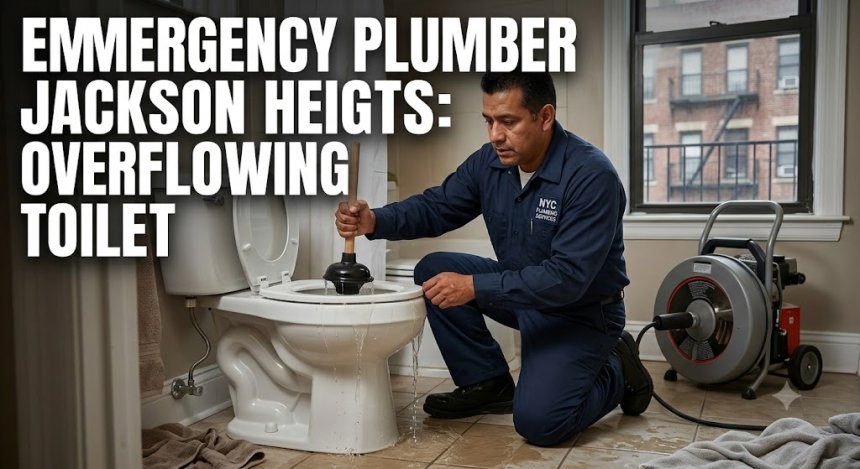
Using specialized tools like a toilet auger (closet auger) or portable sewer scope camera, the plumber inspects the trapway and waste pipe to locate the precise source of the blockage.
Step 3: Upfront Repair Estimate
The technician explains whether the clog requires a simple mechanical clearance, toilet reset, wax ring replacement, or main drain clearing, providing a transparent cost estimate before starting.
Step 4: Obstruction Clearance or Toilet Reset
The plumber uses a professional-grade auger to clear the trapway without scratching the porcelain. If an object is wedged deep or the wax ring is damaged, they pull the toilet off the floor to clear the blockage from below.
Step 5: Fixture Inspection & Component Upgrades
The plumber inspects internal tank parts—including the fill valve, flapper, flush valve, and supply line—and replaces worn or leaking hardware as needed.
Step 6: Leak & Flush Testing
The toilet is reinstalled with a new commercial wax ring, bolted securely, connected to the water supply, and test-flushed multiple times while monitoring for leaks or slow drainage.
Step 7: Area Sanitization & Prevention Advice
The work area is cleaned, and practical maintenance tips are provided to keep your drain line clear.
Can You Fix It Yourself?
Knowing what steps to take yourself—and when to call a professional—can stop minor overflows from becoming major floods.
Safe Immediate DIY Actions:
-
Stop the Water Flow Instantly: Reach behind the toilet bowl near the floor and turn the oval shut-off valve handle clockwise until it stops.
-
Manually Close the Flapper: If the wall valve is stuck or rusted shut, quickly lift the toilet tank lid, reach in, and press the rubber flapper down over the opening at the bottom of the tank to stop water from entering the bowl.
-
Lift the Float Cup or Arm: Raising the float mechanism inside the tank stops the fill valve from sending water down the overflow tube.
-
Use a Flange or Accordion Plunger Correctly: Ensure there is water in the bowl to cover the plunger cup, create a tight seal over the drain hole, and push and pull with firm, steady rhythm.
Dangerous Pitfalls to Avoid:
-
Never Keep Flushing to "Force" the Clog Down: Repeatedly pressing the handle when the bowl is full will only dump tank water directly onto your floor.
-
Do Not Pour Caustic Chemical Cleaners into a Blocked Toilet: Chemical drain openers generate heat that can crack vintage porcelain, destroy rubber seals, and splash back onto your skin or eyes during plunging.
-
Avoid Using Metal Coat Hangers: Using makeshift wire hangers can scratch porcelain finishes and get permanently stuck inside the toilet's internal S-trap.
Tools Professionals Use
Licensed plumbers rely on professional-grade equipment to clear tough toilet clogs safely:
-
Heavy-Duty Toilet Augers (Closet Augers): Flexible, rubber-sleeved steel snakes designed to clear obstructions from toilet trapways without damaging porcelain.
-
High-Definition Drain Inspection Cameras: Waterproof cameras attached to flexible push-cables to inspect deep waste lines for root intrusion or collapsed piping.
-
Drop-Head Cable Drain Snakes: Motorized drain clearing machines equipped with specialized cutting heads to clear stubborn paper, grease, or scale blockages.
-
Hydro Jetting Systems: High-pressure water equipment used on main sewer lines to scour scale and organic waste off pipe walls.
How Long Does the Repair Usually Take?
Repair timelines depend on the severity of the blockage and whether the toilet needs to be removed from the floor:
| Repair Category | Scope of Work | Estimated Duration |
| Simple Auger Clearing | Clearing an obstruction inside the toilet bowl or upper trapway | 30 to 60 Minutes |
| Toilet Removal & Cleanout | Pulling the toilet, removing wedged objects, replacing the wax ring, and re-mounting | 1.5 to 2.5 Hours |
| Main Drain Clearing | Snake or jet main building lines connected to the bathroom branch | 2 to 4 Hours |
Cost Factors
Understanding the variables involved helps clarify how emergency repair costs are structured.
Key cost factors include:
-
Emergency Callout & After-Hours Service: Priority dispatch during late nights, weekends, or holidays carries specialized emergency service rates.
-
Method of Clearance: Simple mechanical augering versus pulling the fixture or deploying motorized drain cleaning equipment.
-
Replacement Parts & Hardware: Installing new fill valves, flappers, braided stainless supply lines, or commercial-grade wax rings.
-
Toilet Removal & Re-seating: Labor required to unbolt, lift, clean, and reset heavy porcelain toilets with fresh seals.
-
Main Line Complications: Complex blockages in building stacks or main sewer lines requiring camera diagnostics or hydro jetting.
Plumbing repair costs vary depending on the severity of the problem, accessibility, materials required, emergency service, property type, and local labor rates.
Hidden Truths Homeowners Should Know
-
Flushable Wipes Are Not Truly Flushable: Synthetic wipes do not break down in water like toilet paper; they collect in drain corners and cast-iron scale, causing main line blockages.
-
Old Shut-Off Valves Can Seize Up: Angle stop valves left untouched for years can freeze or leak when turned forcefully during an emergency.
-
Repeated Plunging Weakens Wax Seals: Heavy plunging creates hydraulic backpressure that can blow out the wax seal under the toilet, causing hidden leaks beneath the floor.
-
Small Bowl Leaks Waste Thousands of Gallons: A faulty flapper or running fill valve can waste hundreds of gallons of water daily, driving up utility bills.
-
Hard Water Scale Reduces Flushing Power: Mineral deposits block rim jet holes over time, weakening siphon action and causing frequent partial clogs.
-
Chemical Cleaners Damage Rubber Components: Chemical drain openers degrade rubber flappers, tank washers, and plastic fill valve assemblies.
-
Insurance May Exclude Damage from Neglected Leaks: Insurance providers often reject claims for water damage caused by long-term, unaddressed plumbing leaks or lack of maintenance.
15 Common Mistakes Homeowners Make
Avoid these frequent mistakes to keep your bathroom plumbing operating reliably:
-
Flushing flushable wipes, paper towels, or baby wipes down the toilet.
-
Pressing the flush handle a second time when the bowl is already full.
-
Pouring harsh chemical drain openers into a fully blocked toilet bowl.
-
Using an improperly shaped plunger (like a flat sink plunger) on a toilet drain.
-
Ignoring slow, weak flushes until a total overflow occurs.
-
Over-tightening toilet floor bolts, which can crack the porcelain base.
-
Leaving emergency water shut-off valves untouched for years.
-
Placing heavy items or brick weights inside the toilet tank.
-
Neglecting to replace rusted or corroded water supply lines behind the toilet.
-
Attempting to clear deep pipe clogs with makeshift wire hangers.
-
Ignoring gurgling noises coming from nearby tub or sink drains.
-
Hiring unlicensed handymen for complex drain line repairs.
-
Failing to clean up spilled wastewater quickly, inviting mold growth within 24 to 48 hours.
-
Using excessive force when turning stuck or stiff shut-off valves.
-
Skipping annual plumbing inspections for older properties and multi-family homes.
Maintenance Tips for Jackson Heights Homeowners
Keep your toilets and drain lines operating smoothly with these practical, easy-to-follow tips:
-
Follow the "Three P's" Rule: Only flush Pee, Poop, and Paper (toilet paper). Everything else belongs in the trash.
-
Test Your Water Shut-Off Valves Annually: Turn shut-off valves under sinks and behind toilets clockwise and counter-clockwise once a year to ensure smooth operation during an emergency.
-
Upgrade to Stainless Steel Braided Supply Lines: Replace old plastic or rigid copper toilet supply tubes with durable braided stainless steel lines.
-
Clean Rim Jet Holes Regularly: Use a small brush or vinegar solution to clear mineral deposits from the jet holes under the toilet bowl rim.
-
Replace Worn Tank Flappers Every 2 to 3 Years: Swap out old, soft, or warped rubber flappers to maintain a tight seal and prevent continuous running.
-
Keep a Quality Flange Plunger in Every Bathroom: Ensure you have a heavy-duty plunger with an extended inner cup designed specifically for toilets.
-
Place Small Trash Cans Near Toilets: Provide convenient trash bins in bathrooms so guests and family members don't flush wipes or personal care products.
-
Check for Hidden Tank-to-Bowl Leaks: Drop a few drops of food coloring into the toilet tank; if color appears in the bowl without flushing after 15 minutes, replace the flapper.
-
Avoid Using Chemical Rim Hangers Inside Tanks: Drop-in bleach tablets break down rubber seals and plastic parts inside the tank over time.
-
Address Slow Drains Immediately: Clear minor drain slowdowns early using an auger or professional service before total blockages form.
-
Educate House Guests and Tenants: Post helpful reminders in guest or rental bathrooms about proper flushing habits.
-
Check Floor Stability Around Toilets: Inspect the base of the toilet for wobbling or soft flooring, which indicates a failing wax ring or subfloor moisture.
-
Keep Main Cleanout Areas Accessible: Ensure clear access to main basement cleanout plugs so plumbers can reach them quickly during an emergency.
-
Insulate Unheated Utility Spaces in Winter: Prevent frozen supply lines by insulating pipes in unheated basements or outer wall cavities.
-
Schedule Annual Plumbing System Inspections: Have a licensed plumber evaluate your water pressure, fixture valves, and drain lines every year.
When Should You Call an Emergency Plumber?
Call an emergency plumber immediately if you encounter any of these situation types:
-
The toilet shut-off valve is frozen or broken, and water continues to spill over the bowl rim.
-
Sewage or dirty wastewater backs up into your tub, shower, or sink when the toilet is flushed.
-
Water from an upper-floor overflow begins dripping through your ceiling or light fixtures.
-
Multiple toilets or main floor drains in your building stop working at the same time.
-
You smell strong, persistent sewer gas indoors following a toilet backup.
Frequently Asked Questions
1. How do I stop a toilet from overflowing if the wall shut-off valve won't turn?
Lift the toilet tank lid immediately, reach inside, and press the rubber flapper down tightly over the drain hole. You can also pull up on the float cup or arm to stop the fill valve from sending more water into the tank and bowl.
2. Can I use a regular sink plunger on an overflowing toilet?
A flat cup sink plunger does not create a proper seal inside a toilet bowl drain. You need a flange plunger (which has an extended fold-out rubber cup at the bottom) designed specifically to seal toilet trap openings.
3. Why does my toilet overflow even when nothing unusual was flushed?
This usually points to a buildup of hard water scale, partial paper accumulation inside the internal S-trap, or a developing obstruction deeper down in the building's main drain pipe or sewer lateral.
4. Are flushable wipes really bad for my plumbing?
Yes. Unlike toilet paper, flushable wipes are made of synthetic fibers that do not break down in water. They catch on pipe joints, tree roots, and cast-iron scale, causing major blockages in main drain lines.
5. What causes a toilet to gurgle when the shower or sink is running?
A gurgling toilet indicates trapped air in the waste system caused by a blockage in the shared branch drain line or a clogged vent stack on the roof.
6. Will an overflowing toilet ruin my bathroom floor?
If left uncleaned, standing water quickly seeps through tile grout and around the toilet base, rotting subfloor plywood, loosening tiles, and causing ceiling leaks in rooms below.
7. How often should a toilet wax ring be replaced?
A wax ring typically lasts 20 to 30 years unless the toilet becomes loose and wobbles, or heavy plunging breaks the seal. If you see leaks around the base, replace the wax ring right away.
8. What should I do if water drips through my ceiling from an upstairs toilet overflow?
Immediately turn off the water supply to the upstairs toilet, wipe up standing water on the upper floor, place buckets under the ceiling drips below, and contact an emergency plumber to address the plumbing line.
9. Why does my toilet keep running long after I flush?
A continuously running toilet is usually caused by a worn flapper that fails to seal, an improperly set float level, or a damaged fill valve that won't shut off.
10. How much does an emergency plumber cost to fix an overflowing toilet?
Plumbing repair costs vary depending on the severity of the problem, accessibility, materials required, emergency service, property type, and local labor rates.
Voice Search Questions
-
"Who is the best emergency plumber for overflowing toilets in Jackson Heights?"
-
"How do I turn off water to a toilet if the valve is stuck?"
-
"Why is water coming up my toilet bowl when I run the sink in Queens?"
-
"Who fixes clogged toilets near 82nd Street Jackson Heights?"
-
"How much does a plumber charge to auger a toilet in Queens NYC?"
Why Choose Plumber in New York City?
When an overflowing toilet threatens your Jackson Heights property, fast response times and expert execution are essential. Plumber in New York City provides dependable, licensed, and highly-trained emergency plumbing services throughout Queens and the NYC area.
-
Experienced Licensed NYC Plumbers: Fully certified technicians equipped to resolve complex residential and commercial plumbing emergencies in full compliance with NYC DOB codes.
-
Rapid Emergency Dispatch: Fast arrival across Jackson Heights, Elmhurst, Woodside, Corona, Astoria, and neighboring Queens communities.
-
Upfront & Transparent Estimates: Clear explanations and upfront pricing before any repair work starts.
-
Modern Equipment & Non-Invasive Techniques: High-grade augers, HD drain inspection cameras, and quality replacement hardware for long-lasting solutions.
-
Quality Workmanship & Customer Care: Professional repairs delivered with care and respect for your home. Customer satisfaction is our top priority.
Don't let an overflowing toilet ruin your bathroom or damage your property. Contact Plumber in New York City right away for fast, professional emergency plumbing services in Jackson Heights, Queens.