Troubleshooting Low Water Pressure in Gilbert Homes
Learn how to diagnose and troubleshoot low water pressure in your Gilbert, Arizona home. Discover common causes, local mineral deposit effects, and practical fixes.
Understanding Low Water Pressure in Your Home
Dealing with a trickle instead of a steady stream from your shower or kitchen faucet is more than just an inconvenience—it is often a symptom of an underlying plumbing restriction or failure. When water pressure drops suddenly or declines gradually over time, pinpointing the root cause requires methodically checking your fixtures, valves, and supply lines rather than guessing at a solution.
In Gilbert, Arizona, low water pressure is a frequent complaint that can stem from simple localized fixture clogs, municipal supply fluctuations, or aggressive mineral accumulation inside home plumbing systems. Understanding how your home's water supply travels from the main line to your tap helps you identify whether the issue is isolated to a single room or affects the entire property.
Isolating the Problem: Whole-House vs. Single Fixture
The first step in troubleshooting low water pressure is determining the scope of the problem. If only one sink or shower suffers from poor flow, the issue is almost always isolated to that specific fixture. If every faucet, showerhead, and appliance in the home experiences weak flow, the restriction lies within the main supply line, the main shut-off valve, or the pressure-reducing valve (PRV).
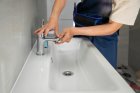
- Single-fixture restriction: Check the aerator on the faucet spout. Mineral scale and debris frequently clog these small screens, choking water flow. Unscrewing the aerator and inspecting it can quickly reveal if trapped sediment is the culprit.
- Whole-house restriction: Test multiple hot and cold taps across different bathrooms and kitchens. If both hot and cold water show reduced pressure everywhere, the problem affects the whole house. Note that if only hot water has low pressure, the issue is typically tied to your water heater's supply valves or sediment buildup in the tank or supply line.
Common Causes of Low Water Pressure
Once you establish whether the issue is localized or system-wide, you can evaluate the most likely mechanical and environmental causes:
1. Clogged Fixture Aerators and Showerheads
Hard water is a common characteristic of municipal water supplies throughout the East Valley of the Phoenix metropolitan area. As hard water evaporates on fixture surfaces or flows through aerators, dissolved calcium and magnesium minerals leave behind solid deposits. Over time, these mineral crystals constrict the exit points, drastically reducing water flow without affecting the pipes behind the wall.
2. Partially Closed Valves
Plumbing valves can occasionally turn themselves partially closed due to vibration, or they may have been left partially shut after previous plumbing work or water meter maintenance. Check your main water shut-off valve (usually located near the front exterior wall where the main line enters the house) and the shut-off valve directly above your water heater to ensure they are fully open.
3. Failing Pressure-Reducing Valve (PRV)
Most modern homes feature a pressure-reducing valve designed to lower high municipal water pressure down to a safe level for household plumbing fixtures—typically between 50 and 70 psi. When a PRV fails internally, the spring mechanism or diaphragm breaks down, causing the valve to choke off water flow entirely or restrict it severely. A failing PRV often causes pressure to drop drastically when multiple taps are opened simultaneously.
4. Internal Pipe Scale Accumulation
Older homes built with galvanized steel piping are particularly susceptible to internal corrosion. Over decades, mineral scale and rust build up inside the pipe walls, choking the interior diameter and choking off volume and pressure. While Gilbert features many newer residential developments with cross-linked polyethylene (PEX) or copper piping, properties built several decades ago may still have aging metallic lines.
Practical Next Steps and Safe Checks
Homeowners can safely perform several diagnostic steps before calling a professional plumber:
Frequently Asked Questions
Frequently Asked Questions
Why did my water pressure drop suddenly overnight?
A sudden, dramatic drop in pressure across the entire house usually points to a failing pressure-reducing valve (PRV), a partially closed main shut-off valve, or a main line leak. If the drop is gradual over months, it is more commonly caused by mineral scale buildup in fixtures or pipes.
Can a water heater cause low water pressure throughout the house?
A water heater can cause low pressure exclusively on the hot water side if the inlet shut-off valve is restricted, the dip tube is damaged, or heavy sediment accumulation inside the tank restricts the outlet port. If both hot and cold water have low pressure, the water heater is rarely the source.
How do I know if my pressure-reducing valve (PRV) is broken?
The most reliable way to test a PRV is to attach a water pressure gauge to an outdoor hose bibb. If adjusting the adjustment bolt on top of the PRV produces no change in pressure, or if the pressure fluctuates wildly when you turn on indoor faucets, the internal components have likely failed and the valve must be replaced.
Is low water pressure a sign of a Gilbert slab leak?
Not necessarily. While a major water leak under the slab foundation can reduce water pressure, it is usually accompanied by other symptoms such as unusually high water bills, the sound of running water when all fixtures are off, warm spots on the floor, or damp flooring. Isolated low pressure is more often related to valves or mineral clogs.
Are there municipal water pressure issues in Gilbert?
Municipal pressure can vary depending on your elevation and proximity to booster stations or water treatment facilities. However, sudden or severe pressure drops inside a single property are almost always related to private home plumbing components rather than city supply failures.