Troubleshooting Low Water Pressure in Gilbert Homes
Learn how to diagnose and troubleshoot low water pressure in your Gilbert home, from simple aerator checks to pressure regulator issues and mineral buildup.

Understanding Low Water Pressure in Your Home
Dealing with a sluggish stream from your showerhead or kitchen faucet can turn everyday tasks into frustrating chores. When water pressure drops below normal levels, it usually signals a restriction, a failing component, or a municipal supply change. In Gilbert, residential plumbing systems face distinct environmental conditions—primarily mineral-rich hard water—that heavily influence how fixtures and supply lines perform over time.
Low water pressure can affect a single fixture or the entire house. Identifying the exact scope of the problem is the first step toward a proper diagnosis. A localized issue points to a localized restriction, while a whole-house drop usually indicates a pressure regulator failure, a partially closed main valve, or supply-side restrictions.
Single-Fixture vs. Whole-House Pressure Drops
Before assuming your entire plumbing system is failing, determine whether the problem is isolated to one area or affecting every tap in the home.
- Localized Low Pressure: If only the kitchen sink or a single bathroom faucet has weak pressure, the issue is typically right at the fixture. Mineral scale often builds up inside aerators, cartridges, or supply line shut-off valves.
- Whole-House Low Pressure: If every shower, sink, and hose bib across the property shows weak flow, the problem lies within the main water supply line, the main shut-off valve, or the pressure-reducing valve (PRV).
Common Causes and Diagnostic Checks
Pinpointing the root cause requires methodical observation rather than guesswork. Here are the most frequent reasons for declining water pressure and how to check for them safely.
1. Mineral Scale Buildup on Aerators and Fixtures
Gilbert's groundwater carries high levels of calcium and magnesium. As water evaporates at the tip of a faucet, it leaves behind mineral deposits that gradually choke off the water flow. Unscrewing the faucet aerator and inspecting the screen is a quick way to check for this. If the mesh is packed with white or crusty deposits, soaking it in a vinegar solution will usually clear the restriction.
2. Partially Closed Shut-Off Valves
Sometimes the simplest explanation is the correct one. If a plumbing repair was recently performed or if a valve was bumped, the main water shut-off valve or an individual supply valve might not be fully open. Check your main water meter box near the property line and your home's main interior shut-off valve to ensure they are turned completely parallel or open to the flow of the pipe.
3. Pressure-Reducing Valve (PRV) Failure
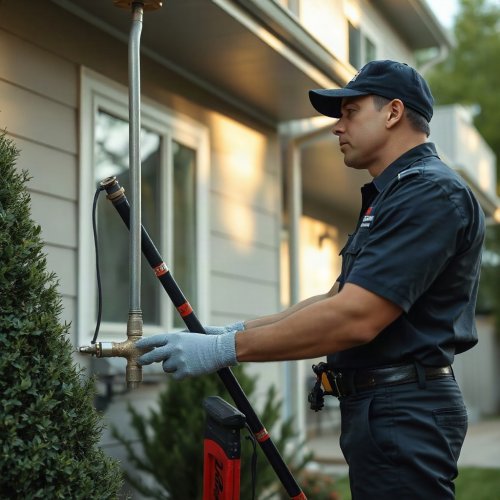
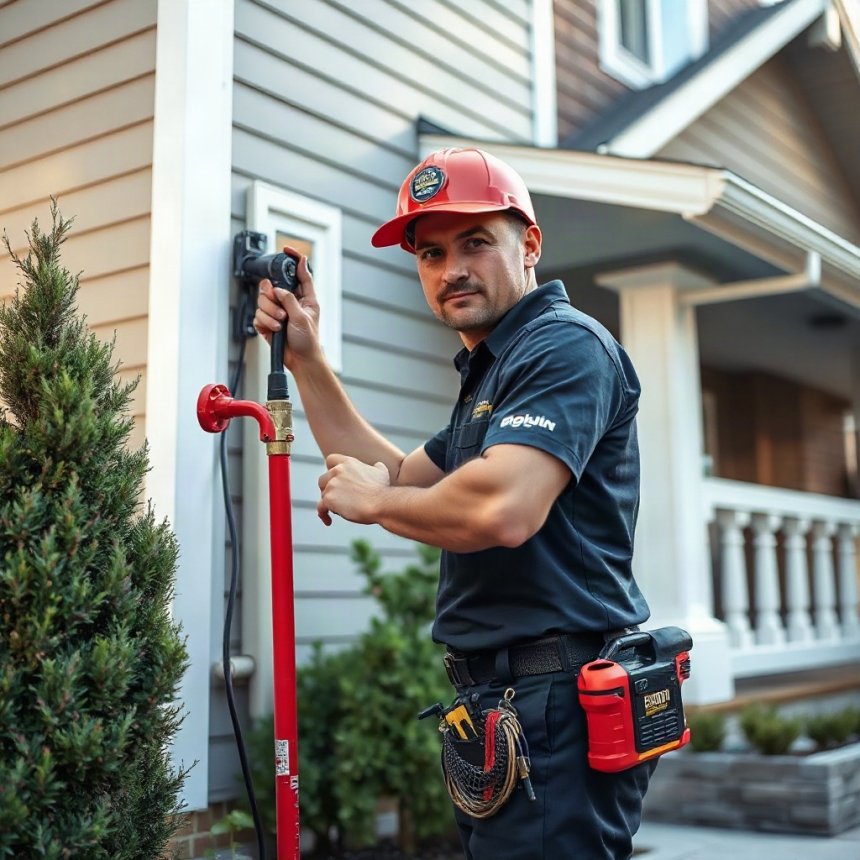
Most homes in Gilbert are equipped with a pressure-reducing valve where the main water line enters the house. This device protects your pipes from excessively high municipal pressure. Over time, the internal springs and rubber diaphragms inside a PRV wear out or become clogged with debris. When a PRV fails, it often restricts water flow entirely, causing a severe drop in house-wide pressure. Testing the pressure with a simple gauge attached to an outdoor hose bib can confirm whether your PRV needs adjustment or replacement.
4. Pipe Scaling and Corrosion
Older galvanized steel pipes are notorious for internal mineral scaling and rust restriction. As minerals coat the interior walls of the pipe over decades, the internal diameter shrinks, severely limiting the volume of water that can pass through. While modern PEX and copper pipes resist this better, mineral accumulation can still occur in fittings and older lines.
Practical Troubleshooting Steps
Homeowners can safely perform a few diagnostic checks before calling a professional:
- Check multiple hot and cold taps throughout the house to see if the issue is restricted to your water heater supply line.
- Test the water pressure using an inexpensive screw-on pressure gauge attached to an outside hose bib. Normal residential pressure typically falls between 50 and 70 psi.
- Inspect visible exposed piping for signs of active leaks, dampness, or sudden unexplained increases in your monthly water bill.
If your pressure gauge reads normal at the hose bib but sinks inside the house are struggling, the restriction is likely internal to your branch lines or fixtures. If the hose bib pressure is also low, the fault lies at the PRV, the main shut-off, or the municipal supply.
Frequently Asked Questions
Why did my water pressure drop suddenly overnight?
A sudden, dramatic drop usually indicates a major event, such as a failing PRV, a broken main water supply line, a municipal water main repair in your neighborhood, or a partially closed main valve.
Can a water heater cause low water pressure?
Yes, but only for the hot water side. If your cold water pressure is fine but your hot water trickles, sediment buildup inside the tank may be clogging the hot water outlet nipple or the inlet supply line.
What is the ideal water pressure for a Gilbert home?
Most residential plumbing systems are designed to operate safely and efficiently between 50 and 80 psi. Pressure above 80 psi can stress joints, valves, and appliances, while pressure below 40 psi feels weak for daily use.
How do I know if my pressure regulator is broken?
A failing pressure regulator often causes erratic pressure fluctuations, a sudden drop across all fixtures, or a total loss of water flow. Attaching a pressure gauge to a hose bib is the most reliable way to test its output.
Is low water pressure a sign of an underground leak?
It can be. If a supply pipe underground or beneath a concrete slab cracks significantly, water escapes into the ground, reducing the volume and pressure available at your household fixtures.