Troubleshooting Low Water Pressure in Gilbert Homes
Learn how to diagnose and troubleshoot low water pressure in your Gilbert, Arizona home. Discover common causes, local mineral impacts, and practical fixes.

Understanding Low Water Pressure in Your Home
Dealing with a weak stream from your showerhead or a kitchen faucet that barely rinses a dish can quickly become frustrating. Low water pressure is a common household complaint, but it is actually a symptom of an underlying restriction or failure somewhere in your plumbing network. Before jumping to conclusions, it helps to understand what constitutes normal pressure—typically between 40 and 60 pounds per square inch (psi) for residential systems—and how to determine whether the issue is localized to a single fixture or affecting the entire house.
Is the Problem Isolated or Whole-House?
The very first step in troubleshooting is isolation. Turn on multiple faucets, showers, and outdoor spigots around your property to see where the pressure drops.
- Single Fixture: If only one sink or shower has low pressure, the issue is almost always isolated to that specific hardware. Look for clogged aerators, partially closed supply valves under the sink, or mineral scale trapped inside a showerhead.
- Whole-House: If every fixture in the home suffers from a weak flow, the restriction lies further upstream. Common culprits include the main water supply valve, a failing pressure reducing valve (PRV), or a developing leak or major mineral restriction in the main service line.
Common Causes and Diagnostic Steps
When the whole house experiences low pressure, systematic checks can help narrow down the cause without unnecessary tools or guesswork.
The Main Shutoff Valve Check
Sometimes, a main water shutoff valve—either at the street meter box or where the main line enters the foundation—gets partially closed during landscaping or property maintenance. Ensure the valve is fully open. A gate valve that has slipped off its internal track may feel open on the outside while remaining partially closed inside.
Mineral Scale and Hard Water Accumulation
Gilbert area water carries high levels of dissolved minerals like calcium and magnesium. Over time, these minerals precipitate out of the water and form a hard, chalky buildup inside pipes, valves, and aerators. Faucet aerators are small mesh screens designed to straighten water flow, but they easily catch mineral flakes. Unscrewing the aerator tip from a sluggish faucet and soaking it in a simple vinegar solution often restores full flow instantly. Unfortunately, when scale accumulates deep inside galvanized or copper supply pipes, DIY cleaning is no longer an option.
Pressure Reducing Valve (PRV) Failure
Most modern homes feature a conical bell-shaped device called a pressure reducing valve, typically located near where the main water line enters the house. The PRV regulates municipal water pressure down to a safe level for household appliances. When the internal rubber diaphragm or spring inside a PRV wears out, it can stick in a restricted position, causing a sudden and severe drop in household pressure. A plumbing professional can attach a pressure gauge to an exterior hose bibb to test the PRV output accurately and adjust or replace the assembly if it has failed.
When to Seek Professional Diagnosis
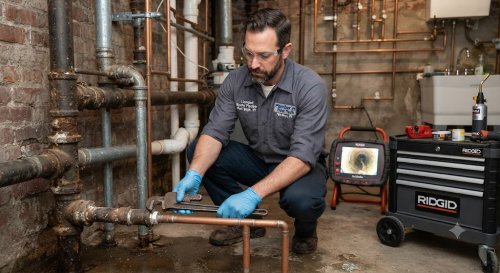
While cleaning an aerator or checking a main valve is well within reach for most homeowners, whole-house pressure drops that do not trace back to a simple valve setting require specialized equipment. Plumbers use calibrated pressure gauges, thermal imaging, and acoustic leak detectors to determine whether a drop is caused by a failing PRV, underground line damage, or severe interior pipe scaling.
Frequently Asked Questions
Can a water heater cause low water pressure?
Yes, but typically only for the hot water side. If your cold water pressure is strong, but hot water trickles out of every faucet, the issue is likely inside the water heater or its supply lines. Sediment accumulation in the tank, a failing thermal expansion tank, or a partially closed inlet valve on the water heater can restrict hot water delivery.
How do I test my home water pressure myself?
You can purchase an inexpensive water pressure gauge with a hose-thread connection from any hardware store. Screw it onto an outdoor hose bibb or a laundry sink faucet, turn the water fully on, and read the dial. Ensure no other water is running inside the home while you test.
Is low water pressure a sign of an underground water leak?
It can be. If a main supply line between the street meter and your foundation develops a significant break, water escapes into the soil instead of reaching your fixtures. If you notice unexpectedly high water bills alongside dropping pressure, an underground leak is a strong possibility.
Why is my water pressure low only during certain times of the day?
If pressure drops noticeably during morning or evening peak hours, it is often related to municipal supply demand. When entire neighborhoods water lawns or run appliances simultaneously, municipal pressure can dip. If the drop is severe, a booster pump system may be evaluated to maintain consistent household pressure.