Troubleshooting Low Water Pressure in Gilbert Homes
Learn how to diagnose and troubleshoot low water pressure in your Gilbert, Arizona home. Identify causes ranging from pressure regulators to hard water scale.


Understanding Low Water Pressure in Your Home
Experiencing a sudden drop in water pressure or dealing with chronically weak flow can make everyday tasks like showering, washing dishes, and doing laundry frustrating. When water pressure drops, the underlying issue can range from a simple, localized blockage in a single fixture to a failing pressure-reducing valve (PRV) or an issue with the municipal supply line.
In Gilbert, Arizona, local water conditions and residential plumbing configurations often dictate how and why pressure issues develop. Pinpointing the exact cause requires systematic troubleshooting, starting with the simplest possibilities before investigating main supply components.
Is the Problem Isolated or Whole-House?
The first and most critical diagnostic step is determining whether the low pressure affects only one specific fixture or every faucet and shower in the house.
- Single-fixture issues: If only one bathroom sink or kitchen faucet has poor flow while the rest of the house operates normally, the problem is localized. This typically points to a clogged aerator, a partially closed supply valve under the sink, or a pinched supply line.
- Whole-house issues: If multiple faucets, showers, and hose bibbs all experience weak flow simultaneously, the restriction is located further upstream. Common culprits include the main water shut-off valve, a malfunctioning pressure regulator, or mineral scale buildup across the system.
Common Causes of Localized Pressure Drops
When a single fixture loses pressure, you can usually resolve it without professional intervention by checking a few common components:
- Clogged Aerators: Faucet aerators and showerheads frequently accumulate mineral deposits, sediment, and debris over time. In Gilbert's hard-water environment, calcium and magnesium minerals precipitate out of the water, physically blocking the tiny mesh screens. Unscrewing the aerator and soaking it in a vinegar solution will often instantly restore full flow.
- Partially Closed Stop Valves: Under sinks and behind toilets, small shut-off valves control water supply. If someone bumped the valve during cleaning or maintenance, it might be partially closed, restricting flow.
- Flexible Supply Line Kinks: Braided steel or PEX supply lines underneath sinks can become twisted or kinked during cabinet work or item storage, narrowing the interior pathway for water.
Whole-House Pressure Restrictions and Mechanical Failures
If your entire home suffers from low pressure, the issue involves the main supply pathway entering the property.
The Main Water Shut-Off Valve
Check the main water shut-off valve, typically located near the water meter box at the property line or where the main water line enters the home. If this valve is not fully open, it acts as a permanent bottleneck for all incoming water. Ensure the handle or wheel is turned completely counterclockwise into the open position.
Pressure-Reducing Valves (PRVs)
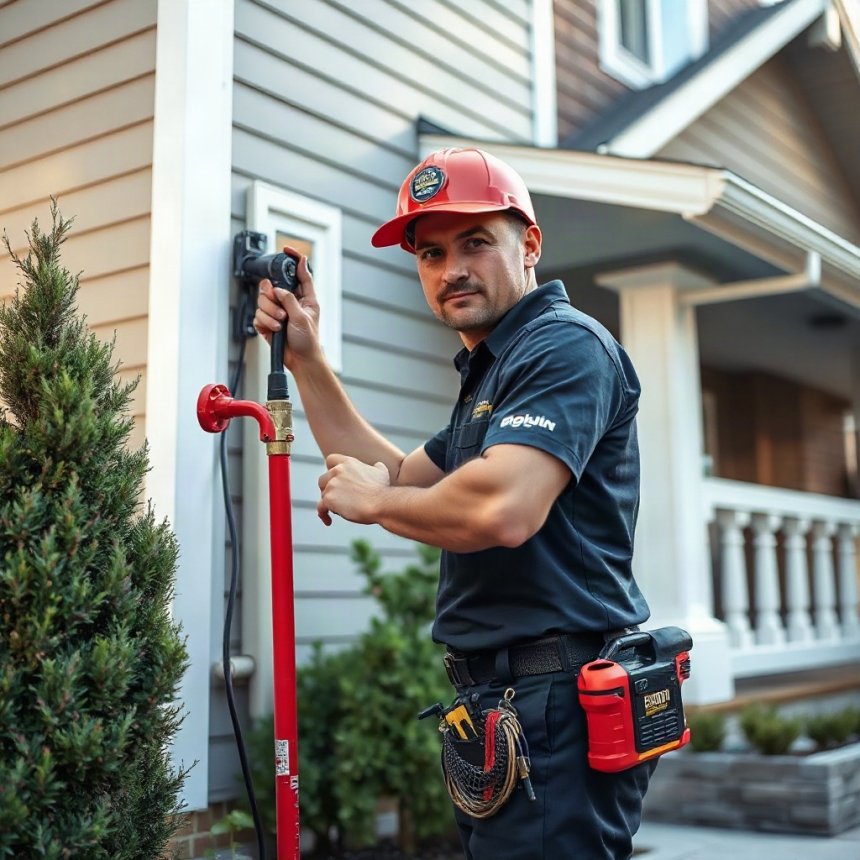
Most residential properties use a pressure-reducing valve to lower high municipal water pressure to a safe level for household pipes and appliances (typically between 50 and 70 psi). Over time, the internal springs, diaphragms, and seals inside a PRV wear out or become choked with mineral scale. When a PRV fails, it often sticks in a closed or partially closed position, causing a severe, sudden drop in whole-house water pressure. Testing or adjusting a PRV requires a water pressure gauge attached to an exterior hose bibb.
Water Heater Restrictions
If low pressure occurs exclusively when using hot water, the restriction is isolated to the water heater supply or the tank itself. Sediment accumulation inside a traditional tank water heater can block the hot water outlet pipe. Additionally, failing thermal expansion tanks or partially blocked inlet valves can restrict hot water delivery.
Gilbert-Specific Environmental Factors
Properties in Gilbert deal with mineral-rich municipal water supplied by local utilities and the Salt River Project (SRP) or Central Arizona Project (CAP). While completely safe for consumption, this hard water accelerates scale buildup inside plumbing fixtures, water heaters, and internal pipe walls. Over decades, cumulative scale accumulation can subtly narrow the interior diameter of galvanized steel pipes, reducing overall flow capacity.
Frequently Asked Questions
Frequently Asked Questions
How do I test my home's water pressure accurately?
You can measure your water pressure by attaching a standard water pressure gauge to an outdoor hose bibb or a laundry sink faucet. Turn the water on fully while all other indoor taps are closed. The gauge will display the static pressure in pounds per square inch (psi). A normal residential reading generally falls between 50 and 70 psi.
Can a water softener cause low water pressure?
Yes, if a water softener experiences internal resin fouling, mechanical valve failure, or severe sediment blockage in its control head, it can restrict water flow to the entire house. Many systems feature a bypass valve; switching the system to bypass mode allows you to determine if the softener unit itself is causing the pressure drop.
Why is my water pressure low only during certain times of the day?
If pressure drops noticeably during peak morning or evening hours, it may be due to municipal supply fluctuations caused by high neighborhood demand. However, if the drop coincides with the irrigation system running, it usually indicates that the irrigation supply tie-in lacks a proper pressure-compensating design or a dedicated sub-meter.
Is low water pressure ever a sign of a hidden leak?
Yes. A major hidden leak—such as a compromised underground service line between the meter and the house or a slab leak beneath the foundation—can divert a large volume of water before it reaches your fixtures, resulting in a noticeable drop in household pressure accompanied by an unexpectedly high water bill.