Common Water Pressure Regulating Valve Failures & Symptoms
Learn to identify common water pressure regulating valve failures, symptoms of PRV failure, and when a residential pressure reducing valve needs replacement.
Understanding Water Pressure Regulating Valve Failure
A water pressure regulating valve (PRV)—often called a pressure reducing valve—is a critical plumbing component installed where the main water supply enters a home. Its primary job is to take high-pressure municipal water, which can sometimes exceed 100 pounds per square inch (psi), and step it down to a safe, manageable residential level, typically between 50 and 70 psi. When a PRV fails, it generally does so in one of two ways: it either stops regulating entirely, letting dangerous surges of high pressure into the home, or it fails completely shut, cutting off the water supply to the property.
Recognizing the early warning signs of a failing PRV can save a home's plumbing fixtures, water heater, and supply lines from catastrophic over-pressurization.
Symptoms of a Failing PRV
Because a PRV controls the pressure for every pipe and fixture in the building, its failure manifests through system-wide symptoms. Homeowners rarely notice the valve itself failing until the downstream effects become impossible to ignore.
- Sudden spikes in water pressure: If you notice water hammering loudly when you shut off a faucet, or if your hose bib reads well over 80 psi on a cheap pressure gauge, the internal spring or diaphragm inside the PRV has likely lost its elasticity or broken.
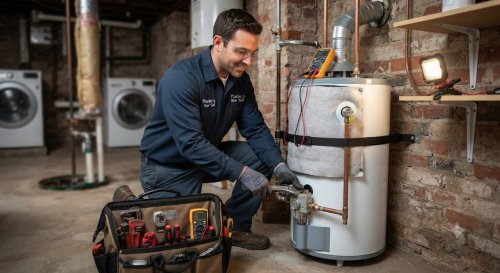
- Unexplained water dripping from the water heater T&P valve: Temperature and pressure relief valves are designed to open if pressure or heat gets too high. High incoming pressure caused by a failed PRV will frequently trigger the T&P valve to weep or discharge water.
- Banging or thumping pipes: Unregulated high pressure magnifies the shockwave created when quick-closing valves (like washing machines or electronic dishwasher solenoids) snap shut, resulting in severe water hammer.
- Leaking fixtures or premature cartridge failures: Faucet cartridges, toilet fill valves, and supply hoses wear out much faster when subjected to continuous high pressure.
- Total loss of water pressure: If internal components rupture or clog with mineral debris, the valve can choke off the water flow entirely, causing a drastic drop or complete cessation of water throughout the house.
Diagnosing the Issue: Testing vs. Guessing
A high-pressure symptom does not automatically mean the PRV is ruined, though it is the most common culprit. Pinpointing the issue requires systematic checking rather than immediate replacement.
The most accurate diagnostic step is screwing a simple pressure gauge onto an outdoor hose bib or a washing machine supply connection. If the static pressure reads above 75 psi when no water is running in the house, the PRV is either out of adjustment or failing. Next, try turning the adjustment bolt on top of the PRV (usually secured by a locknut) to see if the pressure responds. If turning the screw changes nothing, the internal mechanisms are stuck or broken.
However, keep in mind that thermal expansion inside a closed-loop system—often caused by a malfunctioning thermal expansion tank on a water heater—can also mimic high pressure spikes, even when a PRV is technically functioning. A professional can isolate whether the high pressure is originating from the municipal supply line or is trapped internally due to thermal expansion.
Repairability and Replacement Considerations
Most residential PRVs are sealed brass units designed as single assemblies. Once the internal diaphragm tears, the seat erodes, or the internal spring cracks, individual internal parts are rarely rebuilt in the field. Instead, the standard repair procedure is complete valve replacement.
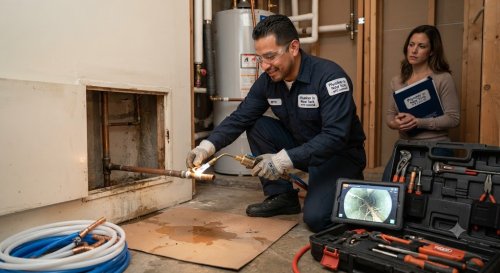
Replacing a PRV involves cutting into the main water supply line, draining the remaining water, and sweating or pressing in a new valve matching the correct pipe size and directional flow. Because these valves endure constant mechanical stress and mineral exposure, attempting to adjust an old, heavily corroded valve can twist or snap the housing, making replacement inevitable.
Practical Insights for Homeowners
The Mineral Factor: In regions with hard water, mineral scale can coat the internal strainer screen and gum up the moving parts of a PRV, accelerating mechanical failure.
Thermal Expansion Interaction: If a home has a closed plumbing system (such as one equipped with a backflow preventer, pressure regulator, or check valve), water expanding as it heats up in the water heater has nowhere to go. This can cause high pressure readings that look identical to a failed PRV.
Adjustments Have Limits: Adjusting the top bolt can temporarily lower pressure if the valve is merely lazy, but it will not fix a torn internal rubber diaphragm.
Frequently Asked Questions
What is the ideal water pressure setting for a residential home?
Most plumbing professionals recommend setting home water pressure between 50 and 60 psi. This provides adequate force for showers and appliances while protecting supply lines and fixtures from undue stress.
Can I adjust my PRV myself?
Yes, if the adjusting nut moves freely. You loosen the locknut and turn the top bolt clockwise to increase pressure or counter-clockwise to decrease it, while monitoring a pressure gauge on a nearby faucet. If the pressure does not change, the valve has internal mechanical failure.
How long does a water pressure regulating valve last?
Most PRVs last between 7 and 12 years. Their lifespan depends heavily on the incoming water pressure, water temperature, and mineral content passing through the valve.
Will a failed PRV affect my water bill?
A failed PRV that allows high pressure won't directly inflate your bill unless it causes a pipe or fixture to leak. However, higher pressure forces more water through open faucets per minute, which can increase water consumption during normal tasks.
Is it dangerous to have high water pressure in my house?
While it rarely causes an immediate safety hazard like a gas leak, sustained high water pressure over 80 psi significantly increases the risk of catastrophic pipe joint failures, supply line ruptures, and appliance damage.