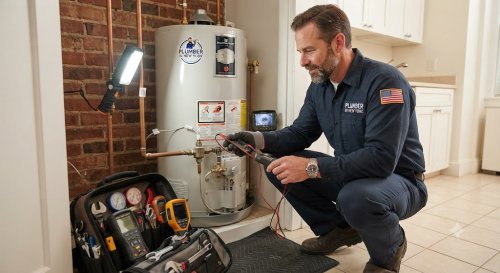
Common Causes of Low Water Pressure in Gilbert Homes
Discover why your Gilbert home has low water pressure. Learn how to diagnose local supply issues, failing pressure regulators, and mineral-clogged fixtures.

Understanding Low Water Pressure in Your Home
When you turn on a shower or kitchen faucet and get a weak trickle instead of a steady stream, it is more than just an inconvenience. Low water pressure changes how your plumbing appliances function, causing washing machines to take twice as long to fill and frustrating anyone trying to take a shower. In Gilbert, Arizona, low water pressure can stem from a variety of sources ranging from simple localized blockages to municipal supply changes and failing hardware.
A critical first step in addressing low pressure is determining whether the issue affects the entire house or just a single fixture. If only one faucet struggles, the problem is almost always localized to that specific aerator, supply line, or shut-off valve. If every tap, showerhead, and hose bib in the home experiences poor flow, the restriction lies further upstream at the main water supply or the pressure regulation equipment.
Single-Fixture vs. Whole-House Pressure Drops
Before assuming a major plumbing failure, isolate where the pressure loss occurs. Walk through the house and test multiple outlets:
- Single Fixture: If only the kitchen sink or guest bathroom shower has low pressure, check the aerator screen at the tip of the faucet spout. Mineral accumulation, sand, or debris trapped in this small screen frequently chokes off water flow. Unscrewing the aerator and inspecting the mesh is a quick, safe check for any homeowner.
- Hot Side Only: If cold water runs strong but hot water is weak, the issue is tied directly to the water heater or the hot water supply lines. A partially closed supply valve on top of the tank, a failing heat trap nipple, or heavy sediment buildup inside the water heater can restrict hot water distribution.
- Whole House: When every tap in the home lacks force, the problem involves the main shut-off valve, a municipal supply fluctuation, or a malfunctioning pressure-reducing valve (PRV).
The Role of the Pressure Reducing Valve (PRV)
Most homes in Gilbert are connected to municipal water supplies that deliver water at high pressures to ensure adequate distribution across neighborhoods. Because high pressure damages residential fixtures, a Pressure Reducing Valve is installed near the main water line entry point to lower the incoming pressure to a safe range—typically between 50 and 70 psi.
Over time, the internal springs and rubber diaphragms inside a PRV fatigue or fail. When a PRV fails, it often defaults to a closed or restricted position, causing a sudden or gradual drop in water pressure throughout the entire house. If you notice your whole-house pressure has dropped significantly and your municipal utility provider confirms they are not performing maintenance on your street, a failing PRV is a prime suspect.
Hard Water Mineral Buildup and Pipe Restriction
Gilbert relies heavily on a combination of groundwater and surface water sources, both of which carry naturally occurring minerals like calcium and magnesium. Over years of use, these minerals precipitate out of the water, especially when heated, leaving a hard, crusty scale inside pipes, valves, and fixtures.
While modern PEX and copper pipes resist major interior scaling better than older galvanized iron piping, localized restrictions still occur. Galvanized steel pipes, found in older properties, are particularly susceptible to internal rust and mineral occlusion. As the inner diameter of an old galvanized pipe narrows due to corrosion, the volume and pressure of water delivered to downstream fixtures drop drastically. Clearing or chemically treating scale inside old pipes is rarely effective; replacement of the affected sections is usually the only permanent remedy.
Partial Main Shut-Off Valve Restrictions
Another frequently overlooked cause of whole-house pressure drops is a partially closed main water shut-off valve. Whether it is the municipal gate valve near the street meter box or the main ball valve where the water line enters your home, if a valve is not fully open, it acts as a bottleneck. Homeowners sometimes accidentally bump these valves while doing yard work or basement maintenance, restricting flow without realizing it.
Frequently Asked Questions
How can I test my home's water pressure accurately?
You can measure your water pressure by attaching a simple water pressure gauge to an outdoor hose bib or a washing machine supply connection. Turn the water fully on and read the dial. Normal residential pressure generally falls between 50 and 70 psi. Readings below 45 psi indicate a restriction or PRV issue, while readings above 80 psi require immediate PRV replacement to protect your pipes.
Why is my water pressure low only during certain times of the day?
If pressure drops noticeably during morning and evening peak hours, it is often due to high municipal demand in your neighborhood. When many households draw water simultaneously, municipal distribution pressure dips temporarily. If the drop is severe, a poorly sized main supply line or a malfunctioning neighborhood booster pump may be contributing to the issue.
Can a water softener cause low water pressure?
Yes. If a water softener is overdue for maintenance, the internal resin bed can become fouled with iron or sediment, or the control valve can clog. Additionally, if the bypass valve on the softener is accidentally left partially open, untreated hard water flows alongside softened water through a restricted opening, reducing household pressure.
When should I replace my pressure reducing valve instead of repairing it?
PRVs can sometimes be adjusted or rebuilt using internal cartridge kits, but if the valve body is heavily corroded, more than 10 to 12 years old, or physically damaged, complete replacement is the safer and more durable option. A new valve restores reliable pressure control and prevents unexpected failures.