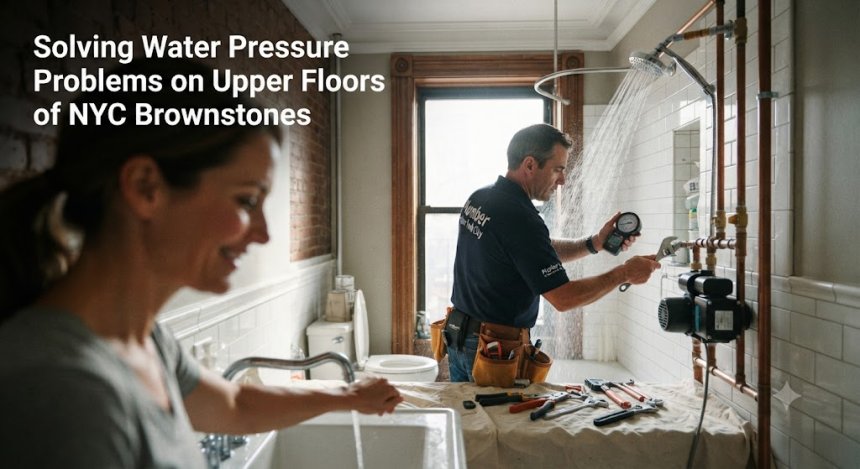
Water Pressure Problems on Upper Floors NYC Brownstone
Dealing with low water pressure on upper floors in a NYC brownstone? Learn the causes, DIY safety, professional repairs, and call a plumber.

Introduction
Dealing with water pressure problems on upper floors of NYC brownstones is a frustrating daily reality for many owners and tenants living in historic properties across Manhattan, Brooklyn, and Queens. Whether you are trying to take a refreshing shower on the top floor of a 19th-century brownstone in Park Slope or washing dishes in a converted Harlem townhouse, turning on a faucet only to find a weak trickle is a major headache. This plumbing issue typically occurs because municipal water mains struggle to push water up three or four vertical stories against gravity, especially when compounded by decades-old, narrowing pipe infrastructure.
Immediate attention is critical because persistent pressure drops can mask hidden leaks, strain domestic water heaters, and render upper-level bathrooms virtually unusable. Homeowners search for this topic frantically when gravity-fed systems fail or booster pumps burn out. Understanding the root causes helps you protect your historic property, navigate local building codes, and know precisely when to call a licensed professional at Plumber in New York City before a minor flow restriction turns into a complete water supply failure.
What Is Water Pressure Problems on Upper Floors of NYC Brownstones?
Water pressure issues on upper stories occur when the force delivering water through your home's internal supply lines drops significantly by the time it reaches the third or fourth floor.
Common Situations
-
The Morning Rush Hour Drop: When multiple tenants or family members use lower-floor showers and kitchens simultaneously, upper-floor fixtures are completely starved of water.
-
The Historic Gravity Deficit: Municipal pressure entering the basement service line lacks the raw head pressure required to lift water vertically past the second floor without mechanical assistance.
-
Partial Riser Blockages: Mineral scaling inside vertical supply risers creates a bottleneck that allows adequate flow downstairs but restricts volume upstairs.
Symptoms
-
Showers that feel like a gentle rain rather than a steady stream.
-
Washing machines that take an hour to fill their drums on top-floor laundry hookups.
-
Sinks that drop to a thin dribble the moment another faucet is opened elsewhere in the house.
-
Intermittent sputtering and air bursts coming from upper-story tap spouts.
Why Does This Plumbing Problem Happen?
Water does not climb multi-story brownstones effortlessly. In New York City, a combination of municipal supply constraints, aging architecture, and heavy daily usage causes severe upper-floor pressure loss.
-
Aging Pipes and Galvanized Buildup: Many historic NYC brownstones still retain sections of original galvanized iron piping. Over decades, internal rust and mineral deposits choke the interior diameter of the pipe, strangling water flow.
-
Corrosion: Decades of exposure to NYC water chemistry causes internal pipe corrosion, creating rough surfaces that slow down water velocity before it reaches top-floor bathrooms.
-
Hard Water Mineral Scaling: High mineral content leaves calcium and lime deposits inside valves, elbows, and supply lines, progressively narrowing the pathways.
-
Inadequate or Failing Booster Systems: Without a properly sized electric booster pump or pressure-sustaining tank, upper-floor apartments in tall townhouses cannot overcome vertical gravity.
-
Improper Pipe Sizing: Past renovations that added bathrooms or kitchenettes on upper floors without upgrading the main riser pipe diameter from 3/4-inch to 1-inch lines create permanent flow bottlenecks.
-
Faulty Pressure-Reducing Valves (PRVs): A malfunctioning or clogged PRV located where the main line enters the basement can restrict incoming municipal pressure too aggressively.
Signs You Should Never Ignore
Catching upper-floor pressure issues early prevents total system failure and protects your home from hidden damage. Watch out for these warning signs:
-
Sputtering Faucets: Air mixed with water pulses through your spouts, indicating pressure fluctuations or air trapped in high-elevation lines.
-
Sudden Flow Disappearances: Water volume dropping to zero when a downstairs toilet flushes points to an severely undersized or blocked primary riser.
-
High Water Bills: A hidden leak in a supply line feeding the upper floors can quietly inflate your municipal utility bills.
-
Strange Noises: Banging pipes or whistling sounds inside the walls when you open top-floor fixtures signal water fighting through pinched valves or constricted joints.
-
Appliance Failures: Dishwashers and washing machines throwing error codes due to insufficient water fill rates.
-
Discolored Water: Rusty or brown water appearing briefly when you turn on upper-floor taps after a period of non-use.
Common Plumbing Problems Related to This Issue
Upper-floor pressure drops are rarely isolated; they often point to broader structural or mechanical failures within the brownstone's plumbing matrix.
-
Pipe Leaks: High localized pressure adjustments or stressed joints can rupture aging supply lines behind historic lath-and-plaster walls.
-
Water Heater Starvation: Tankless or standard water heaters located in basements or cellars struggle to trigger ignition or maintain consistent hot water delivery when upper-floor flow rates drop below operational thresholds.
-
Fixture Damage: Shower cartridges and ceramic mixing valves wear out prematurely due to constant pressure starvation and mineral abrasion.
-
Clogged Aerators: Faucet screens packed with rust flakes and calcium chunks shed from deteriorating riser pipes.
Step-by-Step Professional Repair Process
When you partner with Plumber in New York City to resolve upper-floor pressure issues, our licensed technicians follow a meticulous diagnostic and repair methodology.
Step 1 Inspection
Our plumber inspects the main basement water entry point, evaluates the municipal service valve, and tests baseline flow rates across multiple floors.
Step 2 Diagnosis
We use pressure gauges, acoustic locators, and pipe inspection cameras to identify whether the restriction stems from a faulty basement PRV, clogged risers, or an undersized booster pump system.
Step 3 Estimate
You receive a transparent, itemized estimate outlining the exact scope of work, code-compliant materials required, and expected timeline before any work begins.
Step 4 Repair
The plumber executes the necessary corrective action, which may include replacing a failing PRV, installing or servicing a multi-stage booster pump, or clearing mineral-choked pipe sections.
Step 5 Testing
We repressurize the brownstone's entire vertical system and simultaneously run fixtures from the cellar to the top-floor master bath to verify balanced pressure output.
Step 6 Cleanup
Our team tidies the work areas, removes old brass fittings and cut pipe sections, and leaves your historic property clean and orderly.
Step 7 Maintenance Advice
We provide customized guidance on managing your brownstone's unique pressure systems and schedule future checkup intervals.
Can You Fix It Yourself?
While cleaning a clogged faucet aerator is a safe DIY task, you should never attempt to modify main supply lines, adjust master PRVs, or service electrical booster pumps yourself in a NYC brownstone.
Safe DIY Actions
-
Unscrew and clean the small mesh screens (aerators) at the tip of your upper-floor bathroom and kitchen faucets to remove trapped mineral debris.
-
Check that all under-sink isolation valves and main apartment shut-off valves are opened fully.
-
Document when pressure drops occur (e.g., specific times of day) to help a professional diagnose the pattern.
When Professional Plumbing is Necessary
Any work involving the main basement water service, vertical risers running through shared or historic walls, or electrical water booster pumps requires licensed expertise. Misadjusting high-pressure components or cross-threading historic pipe threads can lead to catastrophic indoor flooding, code violations, and costly damage to neighboring properties.
Tools Professionals Use
Professional NYC plumbers utilize specialized, non-invasive equipment to diagnose and solve complex brownstone water pressure issues accurately.
-
Digital Pressure Gauges: High-precision instruments attached to hose bibbs and fixtures to map exact PSI drops across different vertical stories.
-
Pipe Inspection Cameras: Miniature fiber-optic scopes used to peer inside vertical supply risers and check for internal scaling or blockages.
-
Acoustic Leak Detectors: Sound-amplifying devices that track hidden pinhole leaks whispering behind historic horsehair plaster walls.
-
Multimeters and Electrical Testers: Essential tools for checking power supply, relays, and pressure switches on motorized water booster systems.
-
Pipe Threaders and Press Tools: Commercial-grade equipment designed to fabricate clean, secure connections when replacing aging brass and copper supply runs.
How Long Does the Repair Usually Take?
Repair timelines for upper-floor pressure problems depend entirely on the root cause and the architectural accessibility of the brownstone's pipe network.
-
Simple Repairs (1 to 2 hours): Cleaning main system filters, replacing faulty faucet cartridges, or adjusting accessible pressure-regulating valves.
-
Moderate Repairs (2 to 4 hours): Replacing a malfunctioning basement PRV or servicing a minor component on an existing water booster pump.
-
Major Repairs (4 to 8+ hours): Installing a brand-new residential booster pump system or repiping accessible vertical branch lines feeding upper floors.
-
Emergency Repairs: Immediate temporary bypasses or emergency shut-offs can typically be established within 30 to 60 minutes of arrival.
Cost Factors
Plumbing repair costs vary depending on the severity of the problem, accessibility, materials required, emergency service, property type, and local labor rates.
-
Diagnostic Fees: Standard flat-rate charges to evaluate multi-story pressure dynamics and test riser flow rates.
-
Parts and Materials: Cost of commercial-grade booster pumps, expansion tanks, heavy-duty valves, and lead-free copper or PEX piping.
-
Labor Rates: Specialized skilled labor required to navigate tight historic brownstone shafts and basement utility rooms.
-
Emergency Service Charges: Premium rates for after-hours, weekend, or holiday dispatch calls.
-
Accessibility: Additional time and care needed when running new lines through finished historic plaster walls or ornate moldings without destroying architectural details.
-
Permit Costs: Municipal or building filing fees required for major pump installations or brownstone plumbing alterations.
Hidden Truths Homeowners Should Know
Owning or managing a multi-story brownstone in New York City comes with distinct plumbing realities that every property owner must understand.
-
Small pressure drops in basement lines compound exponentially by the time water reaches the fourth floor.
-
Cheap temporary fix valves and mismatched fittings installed during past quick-fix remodels restrict water velocity even further.
-
Homeowners insurance policies frequently deny claims resulting from long-term damage caused by neglected, corroding internal pipe infrastructure.
-
Hard water in NYC aggressively attacks untreated metal pipes, shortening the operational lifespan of all connected fixtures.
-
DIY plumbing errors in historic townhouses can violate local municipal codes and create major liabilities during property sales.
-
Delaying pressure evaluations places chronic, uneven strain on water heaters and washing machine solenoids, leading to premature appliance failure.
-
Installing a professional booster pump completely transforms upper-floor living standards, boosting property rental and resale value.
-
Annual system maintenance catches scaling and PRV degradation before total pressure loss shuts down upper bathrooms.
15 Common Mistakes Homeowners Make
-
Ignoring gradual pressure loss: Assuming a weakening upper-floor shower is just an unavoidable quirk of living in an old brownstone.
-
Using chemical de-scalers incorrectly: Pouring harsh commercial chemicals into household systems, which ruins metal fixtures and pipe joints.
-
Over-adjusting the basement PRV: Twisting pressure-regulating valves blindly without a pressure gauge, risking pipe blowouts.
-
Hiring general handymen: Using unlicensed workers unfamiliar with NYC brownstone riser configurations and building codes.
-
Skipping annual booster pump checks: Failing to service pump check valves and pressure switches regularly.
-
Waiting until a total outage occurs: Putting off diagnostics until upper-floor apartments have zero running water.
-
Using mismatched pipe materials: Joining incompatible metals together, which accelerates galvanic corrosion and leaks.
-
Over-tightening historic fittings: Applying excessive wrench force to old brass threads, cracking fragile vintage fixtures.
-
Failing to locate main water shut-offs: Not knowing how or where to shut off water to the building during an emergency.
-
Painting over wall dampness: Ignoring moisture stains near vertical pipe chases behind upper-floor walls.
-
Neglecting water filter replacements: Allowing whole-house sediment filters to clog completely, choking flow to upper floors.
-
Ignoring water meter restrictions: Forgetting to check municipal utility supply meters for incoming pressure anomalies.
-
Overloading multi-story demand: Adding high-flow fixtures upstairs without verifying if the existing supply riser can handle the volume.
-
Discarding manufacturer guidelines: Operating booster pumps outside of recommended pressure curves and cycle limits.
-
Attempting DIY electrical work: Wiring 220V booster pump relays without a licensed electrician or plumber.
Maintenance Tips
Keep your NYC brownstone's water pressure running strong across every floor with these practical maintenance practices:
-
Test your upper-floor static water pressure with a simple hose-bibb gauge every six months.
-
Inspect the basement pressure-reducing valve annually for mineral buildup, weeping, or calibration drift.
-
Clean all faucet aerators and showerheads twice a year to remove trapped sediment and rust flakes.
-
Service your electric water booster pump and check pressure tank bladders annually with a licensed technician.
-
Replace whole-house sediment water filters every 3 to 6 months depending on local NYC sediment loads.
-
Insulate vertical riser pipes running through unheated or exterior-facing brownstone walls to prevent winter freezing.
-
Monitor your water utility bills monthly for unexpected jumps that could indicate a hidden pressure-related leak.
-
Keep emergency contact numbers for Plumber in New York City saved in your phone for rapid support.
-
Know the exact location of your primary basement water service shut-off valve.
-
Flush your water heater annually to prevent heavy mineral scale from backing up into vertical supply lines.
-
Check under all upper-story sinks and bathroom vanities monthly for subtle moisture or weeping joints.
-
Avoid running high-demand appliances simultaneously during peak morning and evening hours if your riser is undersized.
-
Consult a professional plumber before undertaking any upper-floor bathroom renovations or adding new fixtures.
-
Keep detailed records of all past plumbing repairs, valve replacements, and pump maintenance.
-
Educate all tenants or family members in the building on proper water conservation and leak reporting habits.
When Should You Call an Emergency Plumber?
Certain upper-floor plumbing scenarios demand immediate, emergency professional intervention:
-
Complete Loss of Upper-Floor Water: Sudden and total failure of water delivery to all second, third, and fourth-floor fixtures.
-
Burst Riser Pipes: A major vertical supply line rupture flooding interior walls and ceilings.
-
Booster Pump Electrical Failure: A smoking, sparking, or completely dead water booster pump leaving the entire upper levels dry.
-
Severe Pressure Spikes: Water pressure surging dangerously high, causing fixtures to hammer, bang, or leak at connection points.
-
Major Basement Supply Leaks: A high-pressure main line break in the cellar flooding the utility room.
Immediate action is essential to protect historic framing, prevent extensive mold growth, and restore basic habitability to your brownstone.
Frequently Asked Questions
Why is my water pressure suddenly low?
Sudden pressure drops are typically caused by a malfunctioning PRV, a partially closed supply valve, a municipal water main repair on your street, or a major hidden leak.
How much does leak detection cost?
Leak detection costs vary based on the acoustic and thermal technologies required and how deeply embedded the leaking pipe is inside historic walls.
Can a clogged drain damage pipes?
While clogs affect drainage rather than supply pressure, standing water weight and backup pressure can weaken waste joints and cause secondary leaks.
Is hydro jetting safe for old pipes?
An experienced plumber must inspect older brownstone iron pipes with a camera first; high-pressure jetting can easily damage fragile, corroded historic lines.
How do I know if my sewer line is broken?
Frequent drainage backups across multiple fixtures, foul sewer odors in the cellar, and wet spots in the yard or basement point to sewer damage.
How long do water heaters last?
Standard tank water heaters last between 8 to 12 years, while modern tankless units can perform reliably for up to 20 years with proper flushing.
Why does my faucet drip?
Dripping faucets are usually caused by worn-out internal rubber washers, damaged O-rings, or corroded valve seats inside the fixture cartridge.
What causes pipes to burst?
Freezing winter temperatures that cause trapped water to expand, extreme pressure spikes, and advanced material corrosion are the primary culprits.
Can plumbing leaks increase my water bill?
Yes. Even a minor pinhole leak or running toilet can waste thousands of gallons per month, dramatically driving up your municipal water and sewer bills.
When should I replace plumbing instead of repairing it?
If your brownstone's pipes experience frequent pinhole leaks, extensive rust, or are made of obsolete galvanized steel, whole-house repiping is far more cost-effective than endless spot repairs.